Video Summary
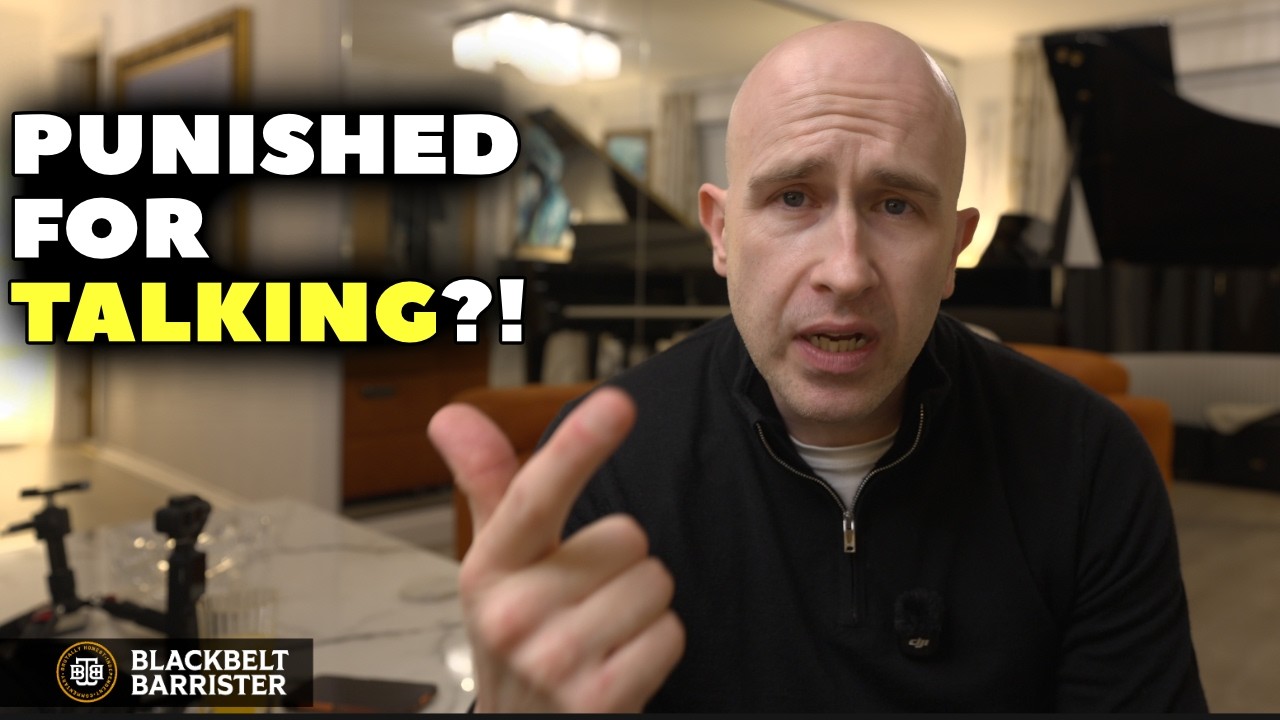
In this update, Daniel ShenSmith addresses the growing threats to free speech across the United Kingdom. He highlights how everyday citizens now face investigations and potential prosecutions for private remarks, online commentary, or even jokes, creating an atmosphere where expressing an opinion carries serious legal risks.
Drawing from recent developments, Daniel discusses an extraordinary Scottish case involving dashcam footage, as well as a protracted regulatory complaint against him that concluded in full dismissal. He critiques regulatory overreach, particularly the suggestion that holding protected philosophical beliefs or hosting online content makes professionals liable for third-party remarks.
Emphasising the vital legal differences between jurisdictions within the UK, Daniel reaffirms the necessity of defending open debate, independent legal commentary, and established legal precedents regarding speech and liability.
For more from Daniel ShenSmith on related questions, see The Andrew Bridgen Case: A Chilling Example of Free Speech Under Threat, Free Speech ROW & Police Bowed to Pressure?, The Dangers of Policing Speech: A Call for Free Expression in the UK, and The Dismissal of a Waitrose Employee: Confronting Shoplifting and the Legal Complexities Involved.
Full Transcript
Introduction
There is no doubt about it. Free speech is absolutely at risk in the UK. And that is if we haven't lost a good portion of it already, because every person in this country who so much as comments online on X, on Facebook, or wherever, or posts a video online, posts their opinion, makes a joke as a comedian, or even comments in their own house and their own car, if you're in Scotland at least, risks facing prosecution, investigation, persecution, and having their lives turned upside down and inside out for months or even years on end.
There is an example that I'm going to give you in this video from the Free Speech Union, which has got to be the most utterly ridiculous example that I have ever seen, which I'll tell you about in a minute. But also my own experience over the last year. I told you briefly yesterday. This isn't the full video, but I'm going to give you another few thoughts on this because this really does concern me.
The Regulatory Report and Investigation
This report into me. Now, as I mentioned, this was a two-part report: the draft that was given to me and then the addendum to the draft, which in their words finalised the draft. So I am left to assume and infer that the whole thing is one report now. The first half being that I should be investigated and they should randomly look through a large sample of my videos to find something that I've done wrong or said wrong. The second bit, the addendum, said, actually, no, there's no need to do that. The original complaint should be dismissed.
Now, to be clear, in my view, my reading, and my barrister's reading, there was no specificity or particularity whatsoever of what I'm supposed to have said about what, in what video, when, and why that is said to have breached any rule. There's just nothing there. There is absolutely nothing specific whatsoever.
It all stemmed from a complaint made last year that was then dismissed early in this year. Only then they sought to do an independent review about it. And ultimately the conclusion was that it should be dismissed and remain dismissed. So to be entirely fair to my regulator here, I believe that the ultimate decision was correct in that it was dismissed and there is no further action. But not before I've been through nearly a year of uncertainty of what's going to happen and how long is this going to drag out for, the ultimate sanction obviously being disbarred for something I'm supposed to have said, even though they didn't specify what it was.
Ideology, Independence, and the Forstater Case
Now one of the most concerning things about all of this, what the most concerning thing I told you yesterday, in that it suggests that a barrister who has any alignment with particular ideologies—without specifying what they were; they didn't say what they were, so I don't know what they're talking about. And in any event, they couldn't possibly know that I have any alignment to any ideology at all. And even if I did, it shouldn't matter because barristers are allowed to have independent views, independent opinions. Barristers are allowed to align with an ideology.
If, for example—I'm not saying that it was this, because I don't know that it was this, because I didn't say that it was this—but let's say that it was sex-based rights. I am an advocate of sex-based rights. You know, we should retain and protect women's rights. Let's say that that was the ideology they were talking about. I don't know that it was, but let's say that it was. If I am aligned to that particular ideology and that I'm defending women's rights, that is a perfectly legitimate basis for a philosophical belief that was established in law in the Forstater case by the tribunal. Because if you have a fundamental belief, a philosophical belief that should be protected and is worthy of protection in law, then that is a legitimate position to hold.
So if that was the ideology, and if I agree with that and align with that—I don't really like the word "align with", because it suggests that you've only got one way of looking at it, but I don't believe that in any event—this suggests that if that barrister were to be aligned with that, then it compromises their independence. I think that is wrong. I fundamentally disagree with that statement.
Liability for Third-Party Comments
Also, it suggests that I would be responsible for third-party comments, comments that other people have left against my videos, and I disagree with that as well. The vast majority of comments are nice, and one or two perhaps are not, but they are not my doing. I don't encourage those; in fact, I actively discourage those.
So, if you would like to support my endeavour here on this channel to continue to bring you my hopefully clear thoughts, clear views, guidance, and assistance, please do subscribe to the channel in support and perhaps in protest of all of this nonsense. And furthermore, in gratitude to the Free Speech Union, firstly for assisting me in this case, but furthermore in assistance to them, in assistance to you, I am going to commit for every few thousand subscribers between here and a million subscribers and maybe beyond, I am going to pay for somebody's membership to the Free Speech Union.
Just to be clear for the YouTube guidelines, this is not me paying in exchange for a subscription. That's not what it's for. YouTube doesn't permit that. This is not me saying someone subscribes, I buy the membership. That's not what it is. I am saying for every few thousand new subscribers to this channel between here and a million, at the very least, I'm going to commit to paying for somebody's membership to the Free Speech Union because I think it is that important.
And so, with that, I'm going to give you an example from the Free Speech Union here, which I find is absolutely ridiculous, but they've had to deal with it. So, for that reason, please do subscribe to the channel. I really do appreciate that. Let me tell you about this. In fact, rather than me tell you about it, listen to Lord Young of the Free Speech Union explain what this case was about. Listen to this.
The Scottish Dashcam Case
Lord Young: "I wanted to tell you about a victory that the Free Speech Union has just won, which I'm really proud of. A Scottish member was exiting the M80 on his way back from an amusement park in Falkirk with his four-year-old son strapped to the back seat. He was cut up by a dangerous driver, had to swerve to avoid a collision, muttered something racist under his breath just after he was almost run off the road by this vehicle. He then contacted the police because he was convinced the guy was drunk and he didn't think he should be driving, endangering other drivers. And the police eventually pulled over both of the cars and they asked to see our member's dashcam footage to see evidence that the other guy was driving dangerously.
A week later, the police contacted him, returned the footage, said a criminal offence had indeed been committed, but not by the other driver, but by him for using these forbidden words under his breath just after he'd avoided what could have been a fatal accident. And he was prosecuted. Prosecuted for supposedly causing alarm and distress, even though the only person he could have possibly caused alarm and distress to was his four-year-old son who was strapped to the back seat. His windows were closed. The other driver wasn't looking at him when he muttered these words. And yet, nevertheless, Police Scotland thought it was appropriate to prosecute him.
But I'm very pleased to say that we found him an excellent barrister and he was acquitted within minutes by the Justice of the Peace. But this is, I think, the closest we've come to defending someone who's being prosecuted for thought crime. These were words that no one apart from his four-year-old son could possibly have heard or even seen him saying. It was just absolutely ridiculous, but happily we managed to get him off. But this is the extent now of the police's overreach when you're deemed to have said something offensive, which in their view is unacceptable, even if nobody heard it apart from your four-year-old son."
Analysis of Speech Laws and Differences Across the UK
Can you believe that? Now I'm not for a moment saying that I condone any kind of racist comment. I don't support that. I don't encourage that, for the avoidance of doubt. But let's be honest, a lot of people make those comments out of anger and frustration. Most people probably don't mean those comments. They probably don't really mean what they say; they just utter it out of frustration. Some people do, of course, and like I said, I don't support that.
But just because this member that they refer to had uttered something that was considered racist, convinced that the dangerous driver had been drinking, they therefore contacted the police. The police eventually stopped both cars, reviewed his dashcam footage, and then a week later the police contact him to say that an offence has been committed, but not by the dangerous driver, but by the Free Speech Union member for those words that he muttered under his breath in the privacy of his own car. And he was prosecuted for allegedly causing alarm and distress, even though it was only him and his son in the car.
Now again, I'm not supporting racist commentary in front of a child. Nobody is permitted to misquote me there. I will fight anybody on that who misquotes me for that. But this was in the privacy of his own car. And so the Free Speech Union found him an excellent barrister, as they did for me, and he was acquitted by the Justice of the Peace within minutes. This should never have gone to court. Who on earth authorised this prosecution in the first place? It is utterly ridiculous.
Now it's highly unusual in Scotland because even in the privacy of your own home or your own car—because the offence, this was the one that I talked about with J.K. Rowling and everything else, where you could make a comment in your own home and it could still be considered an offence. And I said this is just ridiculous. If I recall correctly, in my video I said it took the authorities in Scotland years to come up with this law and put it all together and then publish the law and everything else, and only 24 hours for J.K. Rowling to prove that it was all nonsense because there was no way they were going to prosecute her under a different limb of the same sort of law. I think it's utterly ridiculous.
Now, here it is a defence in England and Wales if it's only in your own home and there's no likelihood of anybody else hearing it. So, at least here in England and Wales it is different to Scotland, but this is why we don't say UK law. There is law that is applicable to the whole of the UK, but it is specific to England, Wales, Scotland, Northern Ireland. The law does differ. So that wouldn't happen—at least it shouldn't happen—in England and Wales.
Not the point. These laws are so utterly ridiculous. It really makes you think who on earth justified this prosecution in the first place when he'd reported a dangerous driver, convinced that this driver had been drinking, and therefore called the police because it was a dangerous situation. Absolutely outrageous, but that is the situation we are in. We get people prosecuted, investigated, and I say persecuted because that's what it feels like. It feels like people are being persecuted just for what they say, just for what they think.
Other cases where somebody has—this is again with the Free Speech Union—another case where someone has reposted something that was intended as a joke and they've been prosecuted because somebody thinks that is offensive. There are countless examples of these kinds of cases. So I absolutely despair at this sort of level of intrusion, of investigation, and of prosecution into just what people have said and what people think.
Legal Precedent on Online Comments and the Channel's Purpose
Now I mentioned that this first half of this now finalised report suggested that I might be responsible for third-party comments on my videos, which again is ridiculous because I cannot possibly be held liable for third-party comments on my videos. I always discourage negative comments; I certainly never encourage them.
And in any event, it has been established firmly in law because I've already been sued by another company for broad claims of harassment which were completely unfounded. They eventually withdrew the claim and it cost them £50,000 in costs. And there is now a judgment online which you can go and read, and it will set out why I am not liable for third-party comments. If I remember, I'll put a little caption on screen of that bit of the judgment; you can pause and read it.
So as I said, I firmly believe that free speech is being eroded in the UK and we need to maintain and protect it. And so to that end, I will keep doing these videos for you. I will remain fair and balanced, which I always aim to be. I have always aimed to be. Even if I inject my own opinion in there sometimes, I'll usually tell you what that is, whether it's my own personal opinion or whether it's my opinion as an experienced barrister of many years, which I'm allowed to do.
This report suggests that I'm not allowed to do that, even though it concludes that there should be no investigation and the complaint is closed. But it suggests partway in it that I shouldn't be allowed to do that and link it as legal education and to my role as a barrister. Now this is not my role as a barrister here. My role as a barrister is if somebody instructs me formally for legal advice or advocacy in court.
You'll probably realise, if you didn't realise you will now, that I have almost never, in fact, I'm not sure that I have ever advertised my legal services here on this channel. And I'm not doing so now. I'm mentioning this to point out that I don't think I've ever done that. I run my own law firm and I run my own chambers, and I've made comment of that fact now and again as part of my experience and say, "At our firm we've dealt with this case and that case and the other case," and I give you examples of those. But I've never really said, "If you want legal advice, come to my firm, the links are below, call us up or call my clerks," that sort of thing. I've never really done that, and I've deliberately not done that because I never wanted people to think that I'm using this as a platform to generate more work from you and get you to ring me up and pay me for advice. I don't think I've ever done that.
I think I've only ever done that if someone has specifically asked and said, "How do we instruct you?" Which many people do. Many kind people do email or leave comments and say, "How can you instruct me?" And then if the case is appropriate, then of course I can assist. Otherwise, we have another barrister in chambers who can do the work, and so on.
Conclusion
This all goes to the point that someone somewhere just doesn't like the fact that I am able to talk to you here and that, because I've been diligent over so many years to hopefully produce consistent commentary on so many issues, this channel has now grown to a reasonably large size.
I am humbled, I am grateful, but there are clearly some people that don't like that fact. They don't like the fact that I raise difficult issues for conversation, I address difficult issues, and I explain difficult issues. Some people just don't want me to talk about those, whether it's immigration, whether it's the trans argument, whether it's free speech, whether it is any other kind of political policy argument or new law or whatever it might be. Some people clearly don't like it, but I'm afraid that's just tough, because I'm doing all of this politely and I'm not doing this in any way that breaks any law or any rule or regulation.
I would defend anything that I've ever said, and so I hope you support me in that endeavour. As I say, we need to support each other. So if you support me by subscribing to this channel, and then in the appropriate cases, if there's somebody—you can leave comments or you can email—if there's somebody that you feel absolutely needs membership with the Free Speech Union, I am going to commit to gifting membership to some people between now and then.
I hope you found that interesting, but we are in this together. We need to support each other. Thank you for watching, and I will see you in the next one.
Introduction
Free speech in the United Kingdom is facing serious challenges. Across the country, individuals commenting on social media platforms, publishing videos, performing comedy, or even speaking within their own vehicles risk police investigation and potential prosecution. Such scrutiny can overturn personal and professional lives for months or years at a time.
Drawing on case examples supported by the Free Speech Union alongside his own recent encounters with regulatory procedures, Daniel ShenSmith highlights the growing pressure on open discourse and why robust protections for personal expression remain essential.
The Regulatory Report and Investigation
Daniel outlines an experience over the past year involving a regulatory complaint brought against him. The resulting two-part report initially suggested an investigation involving a random review of a large sample of his online videos to uncover alleged misconduct. However, the subsequent addendum concluded that there was no need for such action and advised that the complaint be dismissed.
Crucially, the documentation lacked any specificity as to what words were spoken, in which video, on what date, or how any regulatory rule was breached. While the original complaint from the prior year had already been dismissed and the final review upheld that dismissal without further action, Daniel notes the prolonged period of uncertainty it created, particularly when professional standing can be placed on the line without concrete allegations.
Ideology, Independence, and the Forstater Case
A significant concern raised in the draft findings was the notion that alignment with particular ideologies compromises a barrister's professional independence. Daniel notes that the report failed to define what ideology it was referring to, but stresses that barristers are entitled to hold independent beliefs.
By way of example, Daniel points to advocacy for sex-based rights and the protection of women's rights. As established in law by the tribunal in the Forstater case, holding a fundamental philosophical belief of this nature is fully protected under the law. Daniel rejects the assertion that holding or aligning with legally recognised philosophical positions in any way impairs professional independence or court objectivity.
Liability for Third-Party Comments
Another troubling element in the initial regulatory paperwork was the suggestion that creators could be held accountable for third-party comments left beneath their videos. Daniel strongly disputes this proposition.
While the overwhelming majority of viewer responses are positive and constructive, Daniel actively discourages negative remarks. A creator cannot control what members of the public post independently, making any attempt to attribute regulatory liability for third-party reactions inherently unreasonable.
The Scottish Dashcam Case
Illustrating the extremes of modern speech policing, Daniel references a case defended by the Free Speech Union involving a motorist in Scotland. After exiting the M80 with his four-year-old son in the back seat, the driver was cut off by a vehicle driving dangerously. In the immediate shock of avoiding a collision, the driver muttered an offensive, racist remark under his breath inside his closed car.
Believing the other driver was intoxicated, he contacted the police to report the danger and provided his dashcam footage as evidence. A week later, Police Scotland informed the reporting driver that an offence had indeed occurred—not by the erratic driver, but by him, for using forbidden language captured on the dashcam audio. He was prosecuted for causing alarm and distress, despite the windows being shut and only his young son being present. Represented by a barrister arranged through the Free Speech Union, the driver was acquitted by the Justice of the Peace within minutes.
Analysis of Speech Laws Across the UK
Daniel observes that while offensive slurs uttered in anger are not to be supported or encouraged, initiating a criminal prosecution over words muttered in private following a near-fatal driving incident represents severe overreach. The case highlights critical distinctions in how laws operate across the jurisdictions of the UK.
In England and Wales, statutory defences protect speech occurring inside a private dwelling where there is no likelihood of outside hearing. By contrast, Scottish legislation has extended scrutiny into private settings, including homes and cars. Daniel questions the public interest in prosecuting citizens who come forward to report serious crimes, noting that criminalising private utterings borders on prosecuting thought and leads to unjustified legal persecution.
Legal Precedents and Educational Commentary
Regarding liability for third-party remarks, Daniel notes that established legal precedent already protects platform hosts. Having previously defended and seen dismissed an unmerited harassment claim brought by an external company—which resulted in a £50,000 adverse costs order against the claimant—formal judgments affirm that content creators are not liable for third-party user comments.
Daniel also addresses the distinction between public legal education and direct client representation. The channel serves as an educational and analytical platform, not a client marketing tool for his practice or chambers. Providing legal insight and commentary on difficult public matters remains fully distinct from accepting formal instructions, and barristers are entirely entitled to share legal perspectives publicly.
Conclusion
Despite pushback against candid commentary on complex legal and political issues, Daniel remains committed to providing balanced, polite, and lawful analysis. Protecting basic freedoms and individual rights requires active engagement and mutual support across the public and legal spheres.
For those seeking to understand their own legal rights, review specific regulations, or draft key legal documents, Black Belt Barrister Pro offers practical templates and specialized legal AI tools to assist your research. Thank you for reading and supporting open discussion.