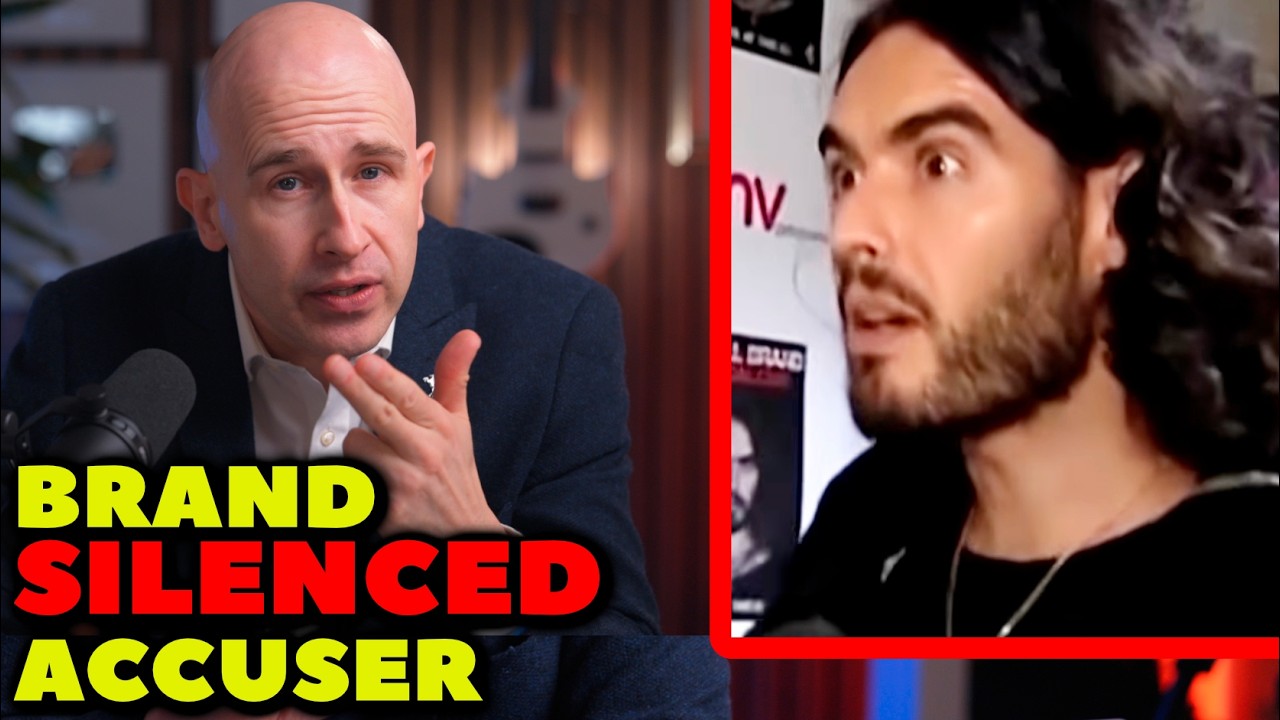
Video Summary
A previously unpublished 2015 High Court injunction obtained by Russell Brand and Jemima Goldsmith against an unrepresented massage therapist has recently come to light. The order was granted via summary judgment without a trial or factual findings regarding allegations stemming from a visit to an Oxfordshire home in June 2014. Daniel ShenSmith examines the extraordinary breadth of this order, which went far beyond ordinary contact prohibitions.
The injunction barred the woman from approaching journalists or disclosing allegations to any person, with narrow medical exceptions that have since lapsed, and omitted an exception for reporting to the police. Lady Justice Falk in the Court of Appeal recently observed that the order on its face appears to prohibit speaking to the police or treating therapists. Coupled with an immediate £50,000 costs order against an impecunious defendant, the legal strategy mirrors classic SLAPP tactics by pursuing harassment rather than libel to secure pre-trial injunctive relief without having to test the truth of the claims.
For more from Daniel ShenSmith on related questions, see Understanding Your Rights: Police Powers and the Legal Framework of Arrests, Why Was Bail Granted? Bail Act Tests, CPS Decisions and the Victims' Right to Review, Absolute Clown Show! Brutally Honest Truth about this Budget, and NO New Job Without a Digital ID?!.
Full Transcript
Introduction
For everyone talking about Russell Brand and his convictions right now, and for that matter, any other celebrity against whom allegations have been made, you might find this video extremely interesting, alarming in fact. And I'll go further to say that I was absolutely amazed that the court made such an order that it did to silence somebody. So what am I talking about?
There is a High Court order from 2015 that was never published. Almost nobody knew that it existed until a few days ago. What this order did from the High Court was to stop a woman from telling anyone what she says happened to her.
Not a journalist, not a friend, not a family, and on the face of the order, not even the police. Now before we get keyboard warriors saying no one can stop you talking to the police, and ordinarily I would agree with you, the Court of Appeal here has looked at this in September and said precisely that, and I quote, that it "on its face appears to prohibit her from speaking to the police or disclosing anything to a doctor or a therapist treating her."
And the man who obtained that order was Russell Brand. So welcome back to the channel. If you are new to me, I am Daniel ShenSmith, a barrister of England and Wales. I enjoy helping you to understand law here. I am on a mission for 1 million subscribers. Please do hit that button down below if you enjoy this reporting because almost no one else is reporting on this story, and I really sort of start to wonder why. So let's talk about this order, shall we? But I have got a few caveats that I have to make because I don't want to be in contempt of court and neither do you by commenting on any of what I talk about here. So I do need to make some caveats, but let me tell you what it is.
Russell Brand, who just last week was convicted and was sentenced to 10 and a half years in prison, which by itself is subject to some sort of scrutiny. People have compared it with other offences, but what I find genuinely shocking about the order in this case, and I have to be clear about what I am being shocked by here, not that someone asked for it, not that lawyers asked for this order because lawyers ask for orders all the time. They do so on behalf of their clients. That is their job, so don't criticise the lawyers here, I think as some news outlets have. What I am amazed by here is that a High Court judge actually granted this order.
Legal Caveats and Contempt of Court
Here come the caveats and they protect me, they protect you. So a word about what I am able to say because obviously an order of this nature comes with its risks, but because it is a point of law that is worth knowing for everybody, I will explain these caveats.
Firstly, I am about to criticise a High Court judgment essentially in reasonably blunt terms. Some of you will be wondering, well, how can a barrister do that? In fact, some people don't like me to do that and would like to see me silenced. And if that's not a reason to subscribe to the channel, I don't know what is. So thank you very much.
But we are allowed to criticise judgments and even judges and all sorts of court decisions. There is a question mark as to whether it is contempt of court. I will come back to that in a minute. But criticising the court and judgments and judges in general used to be an offence in England and Wales called scandalising the court, especially criticising a judge in a way that might undermine public confidence in the administration of justice, which is a term that has been thrown around just recently. It is an ancient common law offence genuinely used and a real restriction on what you could say about judicial decisions. However, not anymore because that was abolished in 2013 under Section 33 of the Crime and Courts Act 2013. So criticising a judgment and saying that a judge got it wrong, saying that an order should never have been given is perfectly lawful. Judgments can get criticised all the time by lawyers, by commentators, by journalists, and even by the Court of Appeal.
But most importantly, two other things I won't be doing are as follows. I won't be discussing the substance of what the woman has alleged and is not allowed to talk about because that is obviously part of the order. The detail is in what they call a confidential schedule. So whatever is in there, no one is allowed to talk about that even if they know what is in there. Of course there are reporting restrictions over it under section 11 of the Contempt of Court Act 1981.
Dan Neidle of Tax Policy Associates, whom I credit for bringing this up and publishing a great article on it which I will link below, has obtained the order and has seen the schedule and won't publish it and neither will I.
The restriction binds everybody who knows about it, including me, including you watching this video because you know about the order. So that's what we are not talking about here.
Second, I am not approaching her. I am not communicating to her directly or indirectly and not suggesting that anybody else should do so either. This injunction binds her but not us. But the order also says that it is contempt of court for anyone who knows about this to knowingly assist or permit a breach of the order. So for example, a journalist who rings her up and asks her to get her talking about it is potentially in contempt of court themselves. So this order is still in force.
Background to the Injunction
With all those caveats out of the way, which are obviously important both for me and for you, let's get to the detail of what's going on here.
Now, firstly, her allegations have never been tested. No court has ever found them to be true. The police investigated apparently at the time and found there was no case to answer. Also, his convictions of last week concern other women and other incidents entirely, so they are completely removed from that injunction. So they tell us nothing about what did or did not happen to this woman. Obviously I can't tell you that she was telling the truth. I cannot tell you that she was lying. Nobody knows.
What really interests me is how a wealthy man who instructs a KC—no criticism of the KC here, he is doing his job—walked into the High Court against a woman who was unrepresented, where there was no trial, no findings of fact either way, and came out with an order that effectively silences her for life.
Here is what we can talk about. In June 2014, as reported, a massage therapist was paid £500 to go and give Russell Brand a massage at Jemima Goldsmith's house in Oxfordshire. Goldsmith was his girlfriend at the time. The woman then went to Thames Valley Police, details of which we know not.
The police investigated, apparently, and apparently found no case to answer. She then took the allegations to the press and to Twitter. But then Russell Brand and Goldsmith sued. What was really interesting is what they sued for and what they pursued, because apparently the original claim form included libel, and what they actually pursued was harassment. Now two very different things. They can overlap, but very different things.
In August 2014, there was an interim injunction. That just means not a permanent one, just in the middle of things whilst they sort things out and make decisions. Then in October 2015, the court ordered summary judgment a month before the trial was due to start and granted a permanent injunction. What is really interesting, so far as I know, is that this woman represented herself. There was no trial, there was no evidence, there were no findings of fact made about what did or did not happen on the day. And what the order says, as I say, is quite alarming.
The order was obtained and published by Dan Neidle on Tax Policy Associates, if you want to go and have a look. It had never been published before.
The Scope of the Silencing Order
Paragraph 3A of the order was fairly ordinary. That was that she must not contact Brand or Goldsmith directly or indirectly. You see, if a judge concludes that someone has harassed you, then that would be a standard remedy, that would be a standard order. But then it goes further.
Paragraph 3B says that she must not approach or even respond to any journalist or media organisation about them. So if a reporter called her today and she answered honestly, she would be in breach of this order. And the journalist is potentially in contempt too because if they knew about the order, then they would be assisting her to breach it.
Paragraph 3C says that she must not publish or disclose to any person orally or in writing any information concerning her attendance at that house on the 7th of June 2014 or any allegation that either of them committed a criminal offence against her. Any person. So obviously not her mother, not a friend, not her partner. A private conversation in her own kitchen would probably put her in contempt of court with this order.
Now as to the police point, because this is really damning, ordinarily if an order said that you can't talk to the police, that would not be a sensible order to make and certainly not reasonable or proportionate. But paragraph 4 of the order sets out the exceptions to this injunction. She can speak to her lawyers, she can speak to the claimants' lawyers, i.e. Brand's and Goldsmith's lawyers, and to her named GP and named therapists and any other doctor treating her in an emergency.
As Dan Neidle noted here, the Court of Appeal's order of this year records that those doctors named in these two provisions no longer treat this woman. And so those exceptions are now useless. Short of an emergency, she cannot mention this incident to any doctor or therapist. None of this seems necessary or proportionate in a harassment injunction. Because that was the complete list and the police were not on that list. So the police were simply not mentioned as an exception to this extraordinarily broad injunction.
This is absolutely extraordinary because on the face of this order, if police officers contacted her tomorrow, she could not answer the phone to the police and talk to them about it without breaching a High Court injunction. And Lady Justice Falk of the Court of Appeal has essentially said as much in September. She said that this order, on its face, appears to prohibit further communications with the police, communications with other claimants in civil proceedings, and disclosures to treating physicians or therapists.
The Court of Appeal order records that the doctors named in those exceptions no longer treat her, as I mentioned. So the medical exceptions are now worthless, short of an emergency. Now I have read and indeed drafted lots of injunctions, some of which arising out of the criminal courts, many of which arising out of the civil courts, and I have never seen one that bars and prohibits somebody from speaking to the police about allegations.
Financial Pressure and SLAPP Tactics
There is still more which makes this even more outrageous. In the original injunction application which was granted, she was ordered to pay £50,000 within two weeks on account. The full bill was likely £100,000 or more. If she didn't pay, the claimants therefore had permission to bankrupt this lady.
Bizarrely enough, the judge himself described this woman as probably impecunious, so she probably didn't have much money. The court knew that she couldn't pay, and yet this order was made regardless.
So that was it. That was the mechanism: the gag plus a debt that she could never pay, plus the consequence of bankruptcy if she didn't pay. Even if there were grounds to fight, then she had nothing to fight with. She had no money to instruct any lawyers with.
Speaking very generally, that is what some people describe as a SLAPP, a strategic lawsuit against public participation, which is where the object is to win an argument by making sure that your other side doesn't have any money to fight it. I am not saying that's exactly what happened in this case, but that is how some cases work. I have known solicitors who have made the comment that they have been instructed to ensure that their opposition runs out of money, so they can't fight it. That is the very reality that we face here.
Harassment Versus Libel
Coming back to the harassment versus libel part, that is a very interesting legal question. Why sue in harassment rather than libel, rather than defamation?
In libel, the defendant has a complete defence, that being the truth. If it were fully tested in court, prove that the statement was true and you win, or opinion or public interest and so on. Under the rules, the courts almost never grant an injunction before trial where the defendant says that they will prove the truth. Free speech prevails and a court decides whether the statement is true or false.
In harassment claims, the truth doesn't operate as a defence in the same way. The question becomes whether the course of conduct and its effect on the claimant is actionable, not whether the underlying allegations were true.
Speaking very generally, not about this case in particular, if someone were to frame an otherwise libel claim, a claim for defamation, as instead harassment and obtain an injunction that you could never have otherwise got in a defamation case, and the defendant never actually gets to argue whether or not what they say happened really happened or not, that is silencing somebody.
The courts know this and they have been sceptical of this for years. Dan Neidle's assessment on this is that in substance, this was a libel injunction in disguise. I think he is probably right. In effect, the court has silenced this woman permanently without ever deciding whether what she was claiming was the truth.
Conclusion
Interestingly, and as my final point, the Court of Appeal did note that there is a potential problem with this injunction and said, and I quote: "While I quite see the concerns about the breadth of the order, the proper way to deal with those concerns would be to apply to the High Court to amend the scope of the injunction based on changed circumstances."
Dan Neidle says, with which I agree, that must be correct. As she said, it is not a matter for this court. It is not a matter of appeal. It is really for the High Court who granted the injunction to consider amending the breadth of the injunction so that she potentially could talk to the police. But either way, a court application would be required and the court would have to agree to amend the injunction.
Until then, she cannot talk of it and neither can you and neither can I.
I hope you found that interesting. Please do like the video and subscribe to the channel. And as always, thank you for watching.
Introduction
In light of recent coverage surrounding Russell Brand, attention has turned to an unpublished 2015 High Court order that silenced a woman from discussing allegations she made about him. The order was drafted in such broad terms that it effectively prevented her from speaking to journalists, friends, family, and on its face, not even the police.
While lawyers routinely ask for wide-ranging orders on behalf of their clients, Daniel ShenSmith expresses astonishment that a High Court judge approved an order of this nature against an unrepresented individual. In September, the Court of Appeal noted that on its face, the order appeared to prohibit her from communicating with the police or disclosing information to treating medical professionals.
Legal Caveats and Contempt of Court
Criticising judicial decisions is entirely lawful in England and Wales. The historic common law offence of scandalising the court was formally abolished in 2013 under Section 33 of the Crime and Courts Act 2013, allowing commentators, journalists, and practitioners to openly review and criticise court orders.
However, strict limits remain regarding the substance of the underlying allegations. The details sit in a confidential schedule governed by reporting restrictions under section 11 of the Contempt of Court Act 1981. Anyone with knowledge of the order, including the public, is bound by law not to assist or permit a breach. Consequently, discussing the confidential allegations or contacting the woman directly is prohibited.
Background to the Injunction
The factual claims have never been tested at a trial, and Brand's separate criminal convictions involve entirely different complainants and incidents. In June 2014, a massage therapist was hired to attend Jemima Goldsmith's Oxfordshire residence to provide Brand with a massage. Following the visit, she contacted Thames Valley Police, who investigated and determined there was no case to answer. She subsequently took her claims to social media and the press.
Brand and Goldsmith initiated legal proceedings that originally included libel but proceeded on harassment. In August 2014, an interim injunction was granted. By October 2015, a month prior to the scheduled trial date, the High Court entered summary judgment and issued a permanent injunction against the unrepresented defendant without any evidence being heard or factual findings made.
The Scope of the Silencing Order
While standard harassment injunctions prohibit direct or indirect contact with the claimants, this order extended far into unusual territory. Paragraph 3B prohibited the defendant from contacting or responding to any media organisation. Paragraph 3C banned disclosing any information concerning her attendance at the property or allegations of criminal conduct to any person whatsoever, making even private conversations a contempt of court.
Furthermore, the explicit exceptions listed in paragraph 4 permitted contact only with the parties' lawyers, named general practitioners, and named therapists. Crucially, the police were entirely omitted from the permitted exceptions list. As noted by the Court of Appeal, the named medical practitioners no longer treat her, rendering those limited exceptions obsolete. Lady Justice Falk remarked that the order appeared on its face to prevent disclosures to treating doctors, participants in civil proceedings, and the police.
Financial Pressure and SLAPP Tactics
Alongside the stringent speech restrictions, the court imposed severe financial burdens on the woman. She was ordered to pay £50,000 on account of legal costs within two weeks, against an estimated bill exceeding £100,000, with permission granted to pursue bankruptcy proceedings if she defaulted.
The judge acknowledged at the time that the defendant was probably impecunious. Daniel notes that pairing an extensive gagging order with an unpayable debt and the threat of bankruptcy mirrors the hallmarks of a strategic lawsuit against public participation (SLAPP), in which litigation is utilised to incapacitate an opponent financially so they cannot maintain a defence.
Harassment Versus Libel
A critical procedural aspect of the case is the claimants' choice to pursue harassment rather than defamation. In libel claims, a defendant has the complete defence of truth. As a general rule, English courts do not grant pre-trial injunctions restraining publication when a defendant intends to justify the allegations at trial, preserving free expression until the facts are determined.
By contrast, harassment claims evaluate whether a course of conduct is oppressive and unreasonable rather than assessing the absolute truth of the disputed statements. Framing the action in harassment allowed the claimants to secure a permanent injunction that silenced the defendant permanently, effectively functioning as a disguised libel injunction that bypassed an evidentiary trial on the facts.
Conclusion
The Court of Appeal observed that the appropriate remedy for addressing the extraordinary breadth of the order is an application back to the High Court to amend its terms based on changed circumstances. Until such an application is made and approved by a judge, the strict terms of the 2015 order remain fully binding.
For those seeking to understand civil procedure, harassment claims, and court documentation, Black Belt Barrister Pro offers specialized legal AI tools and professional templates to help you research and navigate complex legal issues independently. Thank you for reading.