Video Summary
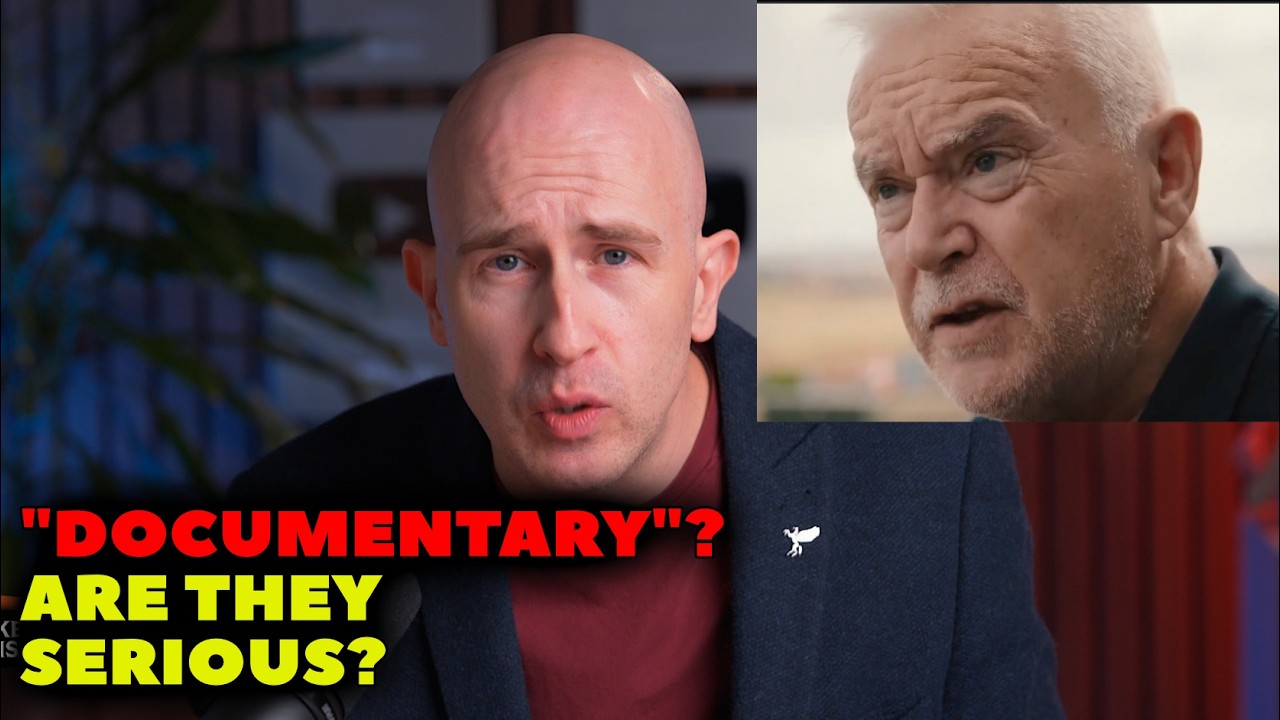
Following reports that former broadcaster Huw Edwards has participated in a Channel 4 documentary to present his perspective, significant public and political debate has erupted regarding whether convicted offenders ought to be afforded such public platforms. Although Edwards argued in a podcast clip that silence is toxic, multiple figures, including government minister Anna Turley and shadow culture secretary Rebecca Paul, have expressed deep discomfort with the broadcaster providing him with an audience.
Barrister Daniel ShenSmith analyses the legal framework surrounding the case, criticising the decision to offer Edwards airtime alongside the original sentencing decision. Edwards pleaded guilty to offences involving indecent images of children and received a six-month sentence, suspended for two years, meaning he avoids the strict licence conditions routinely imposed on offenders released early from custodial sentences.
The case highlights apparent disparities in how different public figures and offenders are treated by authorities and broadcasters. Daniel contrasts the documentary appearance with state attempts to limit the public reach of individuals such as Russell Brand and Daniel Thomas, as well as the ongoing custodial recall faced by Alex Belfield following alleged licence breaches.
For more from Daniel ShenSmith on related questions, see Russell Brand's Injunction to Silence Accuser, Calls for Transparency Following Belfast Attack: Public Demands Information, and Navigating the Complexities of Social Media Regulations for Children: A UK-US Perspective.
Full Transcript
Introduction
You read it correctly, albeit somewhat unbelievably, but they are giving Huw Edwards airtime once again to tell his side in a documentary. Now, I'm a proponent of free speech, but that doesn't mean I agree with this. And I don't think many people agree with this to be quite honest. Particularly when you consider that this government is trying to silence other offenders from speaking out in different ways, to the extent, for example, the government minister that went to YouTube to ask that they please take down Russell Brand's YouTube channel because his wife was making statements to the public, or Daniel Thomas's supposed licence conditions, which is an interesting point in the Huw Edwards case which I'll come back to in a moment.
One thing that tells you pretty much everything you need to know about this story is that I cannot tell you in explicit detail what he was convicted of. Most of you know broadly speaking what he was convicted of, but I can't tell you in explicit detail because this video of mine here will get limited by YouTube because they wouldn't consider that family-friendly, and it's a family-friendly platform. So I can hint at it certainly after the first two minutes of the video, which is another rule for YouTube. After the first two minutes, I'll give you an idea of what it was and why it's so bad. But even then, I can't go into explicit detail.
So, why are they giving him airtime? I don't know. But since they're giving him airtime, I thought I'd give him airtime, but with my opinion attached. Not airtime to tell his side of the story; I'll tell you what I think of his side of the story.
Airtime and the Public Backlash
Now, full caveat here: this is just a personal opinion piece. Yes, I'm a barrister, but this is just my personal opinion on these things. I am a proponent of free speech, but I don't think we should be giving people like this airtime. That's just my opinion.
He, on the other hand, says that silence is toxic. Well, it may be, but it depends what you're talking about, because as we all know, he was convicted. He pleaded guilty and he didn't go to prison. Now, a lot of people, including me, think he probably should have gone to prison. But the fact that he didn't go to prison comes along with a lot of other interesting facts that allows us to compare it with other offenders who've got these licence conditions and everything else.
A brief note on Alex Belfield in just a moment as well, who remains in prison by the way because he was recalled to prison and had this two-day parole hearing which was adjourned and now I understand has been kicked down the road until the spring. So I don't know whether they'll conclude anything in the meantime or whether they just wait until it gets back into the hearing in the spring. But again, that's just someone else who is now in prison. Considering the difference in offences here—not to absolve or condone what Alex Belfield is in prison for—I really think Huw Edwards should have gone to prison. That's just my personal opinion. Let me know in the comments what you think about that. I think Andrew Gold agreed with me on that when I went on his podcast, Heretics, to talk about these types of cases.
On the point of free speech, by the way, thank you all so much for subscribing to the channel and supporting me here. I am but one independent voice. There is just me. There is no team. There is no studio apart from this room here that I call a studio. It's just me. So, thank you all for subscribing. Hopefully, I can be as balanced as possible wherever I can, offering a voice of reason, a balanced view. But on this occasion, it will be a bit of an opinion. So, for those that don't like my opinions, that's just tough. We've all got an opinion and I'm allowed to express it. So, thank you for subscribing and thank you for supporting me.
Huw Edwards is apparently giving his first interview according to the BBC since the image conviction, again being careful about what I say here. He was seen saying that he believes silence is toxic in a clip of a podcast released by The Observer, and he's been interviewed for this Channel 4 documentary.
Channel 4 has defended this documentary despite Anna Turley, a government minister, saying that she was deeply uncomfortable with the interviews, and shadow culture secretary Rebecca Paul said, "This man shouldn't get a minute of airtime." I agree with that. I don't think he should get a minute of airtime. And this video of mine, for the avoidance of doubt, is not me giving him airtime. It is me criticising the fact that they are giving him airtime, and I'm criticising what he's been convicted of and the sentence that he got. Because for the avoidance of doubt, my personal opinion: I don't agree with the sentence he got. He didn't go to prison. I think he should have, frankly.
Channel 4 defended this documentary and said that a highly experienced director holds him to account with no questions off limits, revealing his account of what led to his offending and very public downfall. On the other hand, I'm all for rehabilitation and rehabilitative measures and things like that, but I think they should happen in private. I don't think it should be something that we give people airtime for. Again, just my personal opinion.
The Conviction and Sentence
I think we're over the two-minute cap now. I'll give you a brief idea. It explains how he admitted, i.e. pleaded guilty, to having 41 images that were sent to him, including showing a victim between the age of seven and nine. I understand actually, going back to the original post here, he had apparently 377 images in total. 41 were indecent, meaning they were underage. The court heard that the category A images were mostly aged between 13 and 15, and one child between seven and nine. That is as much detail as I can go into, and I might even end up having to cut that bit out of this YouTube video, but that is as much as I can say. So, if you're watching this after it's been edited and you wonder what I just said, well, you can go and look it up and you'll probably find out. But that is what he pleaded guilty to and didn't go to prison.
Instead of going to prison, he was given a six-month sentence, suspended for two years. He was also given a sex offender treatment programme, required to attend a 40-day accredited programme, a rehabilitation activity requirement, and financial penalties: he was ordered to pay £3,000 in prosecution costs, which is pocket change for someone who was in his position for so many years. He was also put on the sex offenders register with notification requirements for seven years, which runs until 2031: notify police of his address, report extended absences, declare any foreign travel.
Interestingly or concerningly in some sense, what was not imposed in this case was a Sexual Harm Prevention Order, which was applied for by the prosecutors, which would have allowed police to actively monitor his internet history and restrict his devices. But the Chief Magistrate ruled it was unnecessary given his progress in therapy and remorse. Now, someone can have remorse even for the most horrendous of crimes. Granted, I'm not denying that, of course. But this all comes back to the fact that, one, I think a lot of people believe that he should have gone to prison for it. And two, giving him airtime to explain his side of the story in a Channel 4 programme—I don't think I'm out of kilter with public opinion here in saying that I don't think that's the best approach. I don't think that's what people want. I don't think people agree with it. I think it's bizarre.
Disparities in Treatment and Licence Conditions
When you compare it, as I said at the outset, when you compare it to other offenders and the government trying to silence those offenders, such as trying to shut down Russell Brand's YouTube channel and Daniel Thomas's supposed licence conditions—I say supposed because they were, as far as I'm aware, not confirmed by authorities, but they were reported to be: not returning to the family home, being in approved premises, given a new name, banned from accessing the internet, fitted with GPS, prohibited from attending social gatherings and public events, unable to work, reporting to a police station, not allowed to use a car without approval, prohibited from communicating with any organisation, and facing the prospect of returning to prison if he breached those licence conditions.
Again, they weren't confirmed so far as I'm aware by authorities, but that's what the family have said that they are, or proposed to have been if he had been sent home early in the new year, which we can infer might mean if he's released at that point, late February it's deemed to be. So if he is then subject to such stringent communications restrictions and not allowed to talk to people, not allowed to go to gatherings, and effectively silenced—you can argue, if you take a very neutral approach to this, you could argue that part of his offending was telling social media and countless thousands of people what he was doing and the authorities believe that that is wrong, so they want to shut that down. You can argue that, you can understand that. But when you compare that with Huw Edwards and putting him on a documentary, the two don't really go together. Also, with the Russell Brand YouTube channel, trying to shut down that channel creates a bit of a disparity here.
The big thing that I think a lot of people didn't talk about here is the mere fact that Huw Edwards did not go to prison. He was therefore not released from prison on licence. If you went to prison and then were released for the remainder of the sentence—just as a brief reminder, let's say you get a 15-month sentence: you'll serve some of it in prison and the remainder on licence. You are then subject to licence conditions. Any breach sees you back to prison. Any alleged breach or perceived breach might send you back to prison until they decide whether it was really a breach or not.
That is why Alex Belfield finds himself back in prison, and he's fighting to get out because he asserts, as far as I understand it, that there's been no breach, and he's fighting that. More on that when I do know more, but that's all I understand right now. But he finds himself back in prison because of an alleged breach of licence conditions.
The interesting point here is Huw Edwards was not sent to prison, so he didn't get any licence conditions. None at all, because he didn't go to prison. Therefore, he was not released from prison on licence. Instead of licence conditions, the Chief Magistrate imposed specific requirements attached to the suspended sentence alongside statutory notification rules when he was sentenced in 2024. This is a suspended sentence order rather than licence conditions, because he wasn't released on licence as such.
Conclusion
In summary, it's all a bit of a quandary because I support free speech, I support rehabilitation, and I like trust in the justice system and everything else, but this just seems wrong to me. The fact that he didn't go to prison, the fact that he had no licence conditions, the fact that there was no Sexual Harm Prevention Order—that's the decision of the judge here, but also the fact that they do try to silence other offenders and yet this guy is apparently getting a documentary to explain his side. Something about it just seems very, very off to me, and I don't think I'm running against public opinion here.
Let me know what you think in the comments. If you do think that he deserves a second chance and airtime to explain his side, then do let me know in the comments what you think. I'd be interested to see what people think. There may be some people that think that; I don't think there'll be many, but let me know what you think.
And as always, thank you for watching.
Introduction
Recent announcements that Huw Edwards is set to appear in a Channel 4 documentary have sparked immediate debate. Despite being an ardent proponent of free speech, Daniel ShenSmith expresses serious doubts about giving the former broadcaster a platform to tell his side of the story, a view shared by substantial portions of the public.
The controversy stands in sharp contrast to the government's approach to other high-profile individuals. Daniel highlights how ministers have previously intervened to curtail public communications, such as approaching YouTube regarding Russell Brand's platform while his wife made public statements, as well as the extensive communication limits proposed in other cases.
Airtime and the Public Backlash
Edwards has publicly asserted that silence is toxic, as heard in a podcast clip released by The Observer. However, Daniel notes that his conviction following a guilty plea makes the provision of broadcast airtime deeply problematic. Politicians from across the political spectrum have voiced strong objections: government minister Anna Turley stated she was deeply uncomfortable with the interviews, while shadow culture secretary Rebecca Paul argued that the former presenter should not receive a single minute of broadcast airtime.
Channel 4 defended its decision to proceed with the documentary, stating that an experienced director held Edwards to account with no questions off limits to explore his offending and downfall. While Daniel supports offender rehabilitation, he contends that rehabilitative efforts should occur in private rather than via prominent television broadcasts.
The Conviction and Sentence
Edwards pleaded guilty to offences involving indecent images of children. The court heard that he had received 41 indecent images out of 377 total images, with category A material depicting victims aged between 13 and 15, and one child between the ages of seven and nine. Daniel notes his personal disagreement with the final outcome, expressing the view that a custodial sentence would have been the appropriate response given the gravity of the offences.
Instead of immediate imprisonment, Edwards was handed a six-month sentence, suspended for two years. Alongside this suspended sentence, the court required his attendance at a 40-day accredited sex offender treatment programme, imposed a rehabilitation activity requirement, ordered £3,000 in prosecution costs, and placed him on the sex offenders register with statutory notification requirements until 2031. Notably, the Chief Magistrate declined the prosecution's application for a Sexual Harm Prevention Order—which would have subjected his internet history and electronic devices to active police monitoring—ruling it unnecessary in light of his remorse and progress in therapy.
Disparities in Treatment and Licence Conditions
A critical legal distinction highlighted by Daniel lies in the mechanisms governing post-conviction supervision. Because Edwards received a suspended sentence rather than immediate custody, he was never released on licence. As a result, he is not bound by statutory licence conditions, but rather the specific requirements attached to his suspended sentence order alongside standard register notification rules.
This stands in stark contrast to offenders released on licence from prison. For example, Alex Belfield was recalled to custody following an alleged breach of his licence conditions and remains imprisoned pending an adjourned parole hearing. Similarly, Daniel points to reported proposed licence restrictions for Daniel Thomas, which included bans on internet access, GPS monitoring, prohibitions on attending gatherings, and strict communication bans. Giving Edwards a major broadcast platform while other individuals face severe restrictions or state-level suppression exposes notable disparities in the treatment of public-facing offenders.
Conclusion
The juxtaposition of Edwards avoiding prison, escaping device-monitoring orders, having no licence conditions, and ultimately securing national television airtime creates justifiable public disquiet. While free speech and offender rehabilitation remain important principles, offering a high-profile broadcast platform to an individual convicted of serious indecent image offences appears entirely detached from public expectations.
For those wishing to examine statutory notification requirements, suspended sentence orders, and related criminal justice procedures in greater detail, Black Belt Barrister Pro offers specialised legal AI tools, documents, and templates to assist you in navigating the law independently.
Thank you for watching and reading.